Garden Days
Plant a seed and watch the days go by.
- Ages
- Ages 4–9
- Length
- About 10 min
- Type
- Game
Levels
Little levels (ages 4 to 6)
- Plant a seed Plant it, water it, let the sun in, and press Next day until it flowers.
- What does it need? Sun and water, water in the dark, or sun with no water: guess which grows best, then watch a week.
- Water wisely Read the soil each day and decide whether to water.
- Parts of a plant Tap the roots, stem, leaves and flower when asked what each one does.
- Seed to seed Put the life cycle in order, from seed to fruit and back to seed.
Big levels (ages 7 to 9)
- Fair test Change one thing for pot 2, predict, and measure ten days on a chart.
- Follow the water Color the water and watch it climb the stem into the petals.
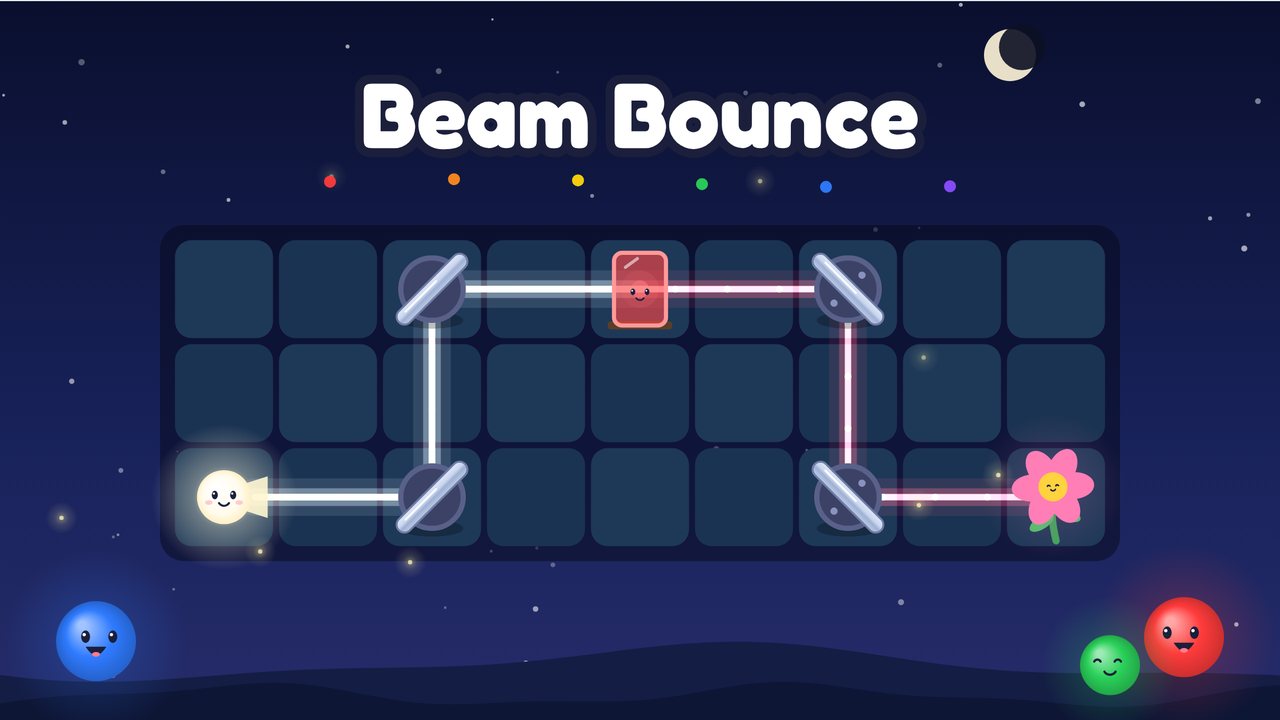
- Lean to the light Move the lamp and predict which way the plant grows.
- Leaf food factory Switch on sunlight, water and air to see the leaf make sugar and oxygen.
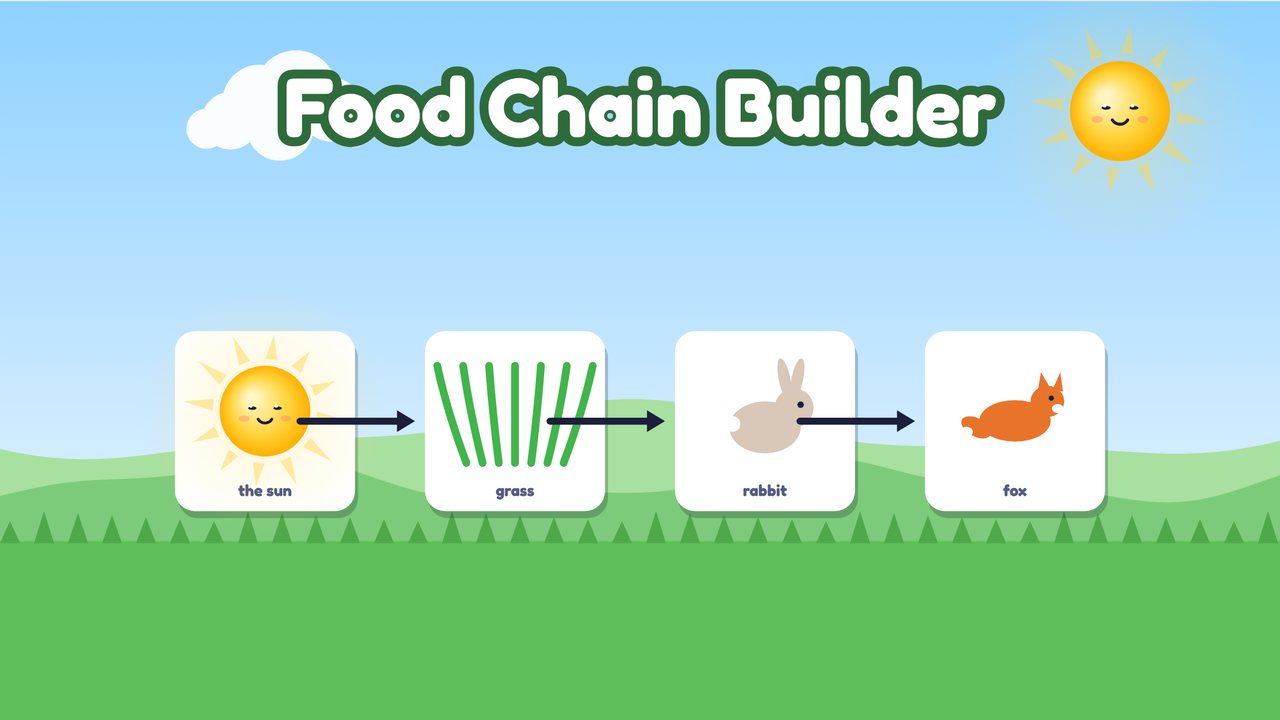
- Seeds on the move Sort seeds by their ride: the wind, an animal, or the water.
- Busy bee Carry pollen from flower to flower so fruit can grow.
For grown-ups
The big ideas
Plants need light, water, air and soil. Take light away and a seedling grows pale, thin and floppy as it stretches to find some. Take water away and it wilts. Too much water drowns the roots, which need air too.
Each part has a job. Roots take in water and hold the plant steady, the stem carries water up through tiny tubes, leaves make food from sunlight, and flowers make seeds.
Leaves make food from light. In photosynthesis, leaves use sunlight, water and carbon dioxide from the air to make sugar, and they give off the oxygen we breathe.
A fair test changes one thing at a time. Two pots that differ only in light show what light does. If two things changed at once, you couldn't tell which one mattered.
Seeds travel, and flowers need pollinators. Wind, animals and water carry seeds to new places. Bees move pollen between flowers, which is what lets a flower make fruit and seeds.
Try it at home
- Bean in a bag Put a dried bean in a clear bag with a damp paper towel and tape it to a window. Check it every day and watch the root and shoot appear.
- The dark cupboard test Grow two identical seedlings, one on a windowsill and one in a cupboard. After a week, compare their color and height.
- Celery stripes Stand a celery stalk in water with a few drops of food coloring. The next day, snap it and look for the colored tubes.
- Seed hunt On a walk, look for seeds that fly, stick or float: dandelion clocks, burrs on socks, winged maple seeds.
Ask after playing
- What happened to the plant that lived in the dark?
- Why should we only change one thing in a fair test?
- What does a leaf make from sunlight, water and air?
Good to know
- 11 levels in two sets: Little (ages 4 to 6) and Big (ages 7 to 9)
- Every line is read aloud by the KidsLearn narrator (can be switched off)
- Sound effects made in the browser, nothing to download (can be switched off)
- Works by tapping, with a mouse, or with the keyboard
- A Hint button for every level
- No timers, no lives, no wrong-answer buzzers